Gender in 2025: Global Trends in Equality and Inclusion
Gender equality remains a complex, evolving landscape in 2025. From workplace flexibility to legal battles over identity, the path forward requires intentional action. By addressing pay gaps, fostering inclusive leadership, and respecting diverse identities, we can build a more equitable world for everyone.
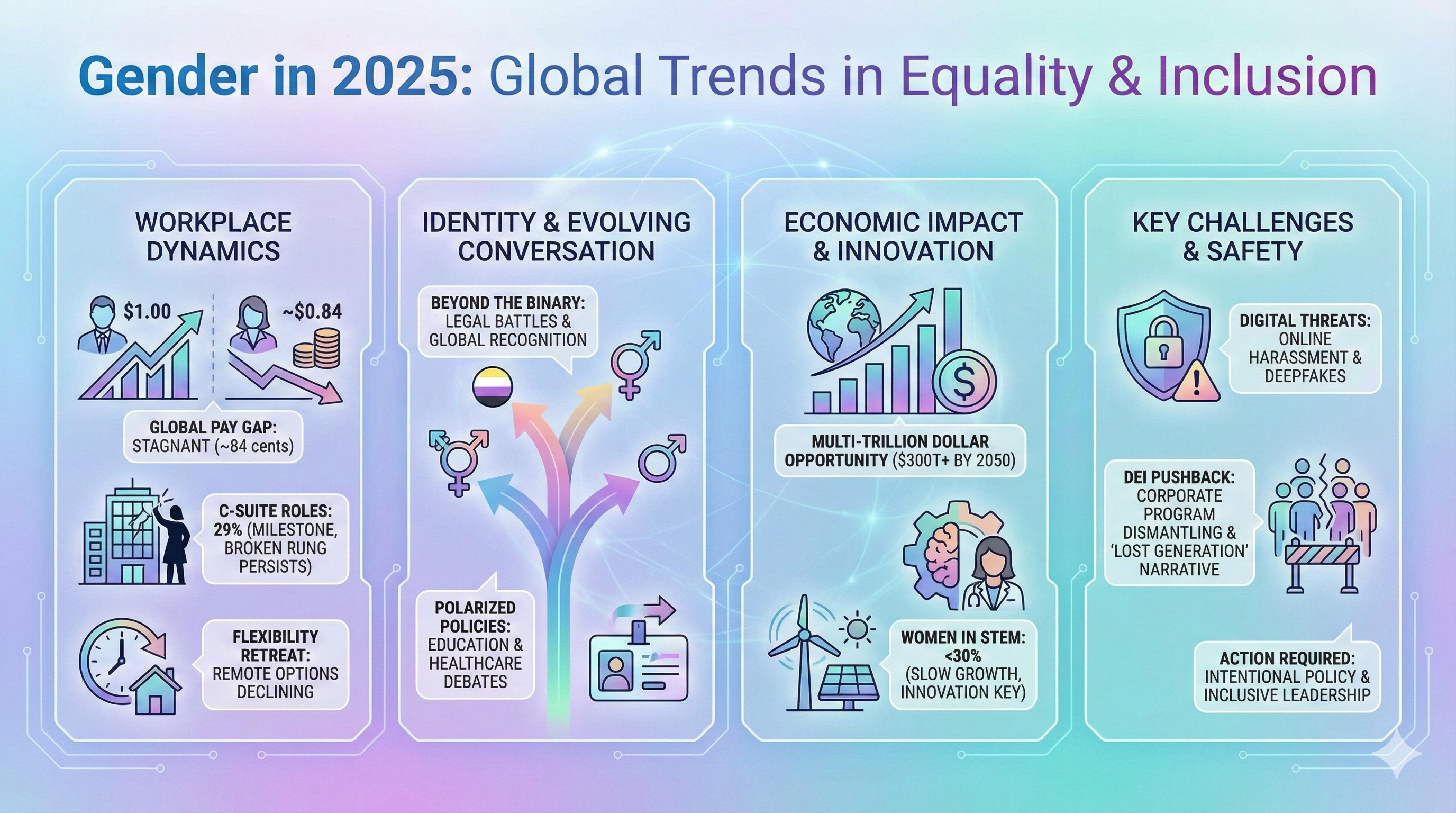
Gender in 2025: Navigating Global Trends in Equality and Inclusion
The conversation around gender has shifted dramatically in the last few years. In 2025, it is no longer just about "breaking the glass ceiling"—it is about navigating a complex landscape of identity, economic power, and evolving workplace dynamics. While some nations report record-high numbers of women in leadership, others are seeing a pushback against Diversity, Equity, and Inclusion (DEI) policies.
Understanding these trends is essential for businesses, policymakers, and individuals who want to foster a truly inclusive world. This guide explores where we stand on gender equality today and where we are heading.
The State of Workplace Equality in 2025
The corporate world remains the primary battleground for gender equality. Despite years of advocacy, the data from late 2025 shows a mixed picture of progress and stagnation.
The Persistent Pay Gap: Globally, women still earn approximately 84 cents for every dollar earned by men. While this is a slight improvement from the previous decade, the gap is closing too slowly.
Women in Leadership: Female representation in C-suite positions has hit a milestone of 29%. However, the "broken rung" phenomenon persists, where fewer women are promoted from entry-level to management compared to men.
The "Flexibility" Retreat: As more companies enforce strict return-to-office mandates, women—who often bear the brunt of unpaid care work—are disproportionately affected. Workplace flexibility, once seen as a perk, is now a critical gender equity tool.
Beyond the Binary: The Evolving Conversation on Identity
Gender identity continues to be a defining social topic. 2025 has seen intense legal and social debates regarding the rights of transgender and non-binary individuals, particularly in education and healthcare.
Legal Battles in Education: Courts in regions like the US (e.g., California) have issued pivotal rulings regarding parental rights versus student privacy concerning gender identity in schools.
Global Recognition: While some countries are legally recognizing non-binary markers on IDs, others are tightening restrictions. This polarization makes it vital for global organizations to have clear, adaptable policies that respect local laws while protecting their employees' dignity.
The Economic Impact of Inclusion
Investing in women is not just a moral imperative; it is a massive economic opportunity.
A Multi-Trillion Dollar Bonus: Recent reports suggest that fully closing the gender gap could inject over $300 trillion into the global economy by 2050.
Women in STEM: The push to include more women in Science, Technology, Engineering, and Mathematics is slowly paying off. However, women still make up less than 30% of the global STEM workforce, limiting innovation in key sectors like AI and renewable energy.
Key Challenges Remaining
Despite the economic arguments, significant hurdles remain:
DEI Pushback: There is a growing narrative in some political circles about a "lost generation" of men feeling excluded by aggressive diversity policies. This has led to the dismantling of some DEI programs in major corporations.
Safety and Violence: Gender-based violence remains a global emergency. In 2025, digital harassment and deepfake exploitation targeting women have emerged as urgent new threats.
Frequently Asked Questions (FAQs)
1. What is the global gender pay gap in 2025?
As of late 2025, women globally earn roughly 84 cents for every dollar earned by men. This gap varies significantly by country and industry, with the technology and finance sectors often showing larger disparities.
2. Why is workplace flexibility considered a gender issue?
Women statistically perform more unpaid labor (childcare, eldercare, housework) than men. Flexible work arrangements allow women to balance these responsibilities without exiting the workforce, making it a key factor in retaining female talent.
3. What does "gender mainstreaming" mean?
Gender mainstreaming is a strategy used by policymakers and organizations to ensure that gender perspectives are central to all activities—policy development, research, advocacy, and resource allocation—rather than being treated as a separate "women's issue."
4. How can men be better allies in 2025?
Men can be allies by advocating for fair parental leave (and taking it themselves), mentoring female colleagues, challenging sexist behavior in real-time, and supporting policies that promote pay transparency.